Categories
CCL Latest News Uncategorized

Upgrade Your Nepali NAATI Vocabulary with Recent Exam Topics

Do you know what’s better than practicing Nepali NAATI vocabulary?

Practicing words from the LATEST Nepali NAATI EXAMS!!

Here at Creative Educations, our team is working diligently to get you the most up-to-date exam topics and vocabulary from Nepali NAATI exam every month.

This month we had dialogs from Health and Housing topics.

Practice your vocabulary from each topic… and upgrade your Nepali NAATI vocabulary.

We will be back next month with newer topics for you. Till then, keep practicing.

And do you know what’s better than practicing vocabulary from the latest NAATI exam?

Practicing with an expert!!!

Contact us on 0422279722 or send us an email at info@creativeeducations.com.au and get hands-on training from our expert trainers.

As promised, here are the latest exam topics, the scenario and vocabulary from Nepali NAATI exams last month.

Topic: Health

Midwifeसुडेनी
Sudden Infant Deathअचानक हुने शिशु मृत्यु
Baby Cotशिशुको खाट / शिशुको बिस्तारा
Consultपरामर्श गर्नु
Vaccinationखोप
Local Community Centreस्थानीय सामुदायिक केन्द्र
Concernचासो / गुनासो / समस्या
Professional Adviceपेशागत सल्लाह / ब्यबसायीक सल्लाह
Appointmentभेटवार्ता
Bookठाउँ पक्का गर्नु / स्थान सुरक्षित गर्नु
Discharge (from hospital)छाड्नु / अस्पतालबाट घर पठाउनु
Motherhoodमातृत्व

Topic: Housing

Property Rentघर भाडा
Rental Bondभाडा धरौटी
General Rentसामान्य भाडा
Security Departmentसुरक्षा बिभाग / धरौटी बिभाग
Protection for Landlordघरबेटीको लागि सुरक्षा / घरबेटीको लागि संरक्षण
Protection for Tenantभाडादारको लागि सुरक्षा / भाडादारको लागि संरक्षण
Loss of Rentभाडामा भएको नोक्सानी
Governmentसरकार
Free Counselling for Bond Dispute धरौटीसम्बन्धि बिबादको लागि निशुल्क परामर्श (सल्लाह)
Tribunalन्यायाधिकरण
Acknowledgment Letterस्वीकार पत्र / आभार पत्र

We will be back next month with a fresh set of exam topics and vocabulary. Stay tuned!!

Categories
Uncategorized

PTE Write Essay…

1 Structure and 6 Tips

In the PTE Summarize Written Text, we were given an essay and we had to summarize it in 70 words or less. Now, in PTE Write Essay, we need to write a convincing essay on any topic we are given.

While writing essays has always been the bane of our existence, with a handful of tips we have for you and lots and lots of practice, we can master it and get a high score here.

So… let’s dive straight into tips to get a good score in PTE Write Essay.

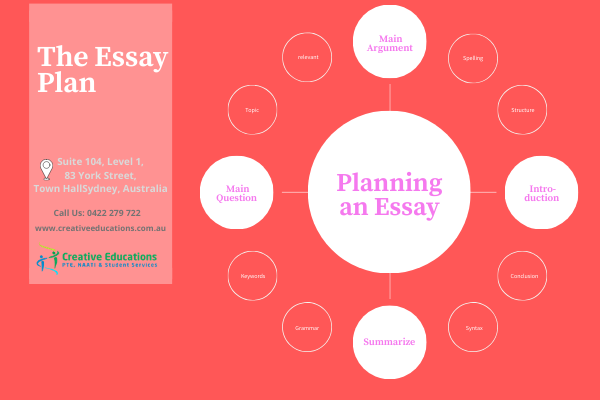
Plan your arguments

Before you even write a single word, spend your time planning your arguments and your approach. You see… you need to write at least 200 words and no more than 300 words and you have 20 minutes to write your essay. That’s why… we recommend that you spend at least 5 minutes in planning your arguments. This way you can make a compelling argument in your essay.

The 4 Paragraph Structure

Here’s a simple structure for you to start practicing.

Introduction – 1st Argument – 2nd Argument – Conclusion

That’s it! Now, let me take you deeper into the structure.

Introduction

In this section, introduce the topic in your own words and then give your opinion on the topic. Then you move onto your…

1st Argument

Here, you explain your first argument and explain it in detail. After that, you go to your…

2nd Argument

Then, you present your 2nd argument and explain it in detail. When you are done with that, you need to formulate your…

Conclusion

What you need to do is, conclude your essay re-iterating your opinion again.

When you write your introduction and your conclusion, make sure that you are paraphrasing from the question.

And remember, the 1st and 2nd arguments can be either in support or against, or entirely in support or entirely against the topic. It is your choice. So, use that freedom wisely.

Focus on grammar and spelling

In the PTE Write Essay section, you must make sure that your essay is grammatically impeccable and has no spelling errors.

Don’t waste your time constructing complex sentences and using sophisticated words if you are not sure about the meaning of the word or the accuracy of the sentence.

Instead, use a sentence structure you’re familiar with and then, focus on being grammatically correct.

Another thing you need to remember is that you should write just over 200 words. Since the prompt is between 200-300 words, you don’t need to waste your time trying to write 300 words. Instead, write just over 200 words, 220-240 being ideal, and then use the remaining time to brush up on your grammar and spelling.

Pick a side… either argue “for” or “against”

As we mentioned above, in most cases, you have the choice to argue either in support (for) or against the question. In some cases, you will be asked to talk about both. And if that happens, follow the 4 paragraph structure to argue “for” and “against” in 1 paragraph each.

Anyways in most cases, you have complete freedom to write 2 paragraphs “for” or “against” the argument in question.

Keep that in mind when you are planning your arguments.

Don’t over-complicate your sentences

Let’s get clear… PTE appreciates complex sentences… but if you try to make it overly complicated in hopes of impressing the PTE AI then you run the risk of making your sentences grammatically incorrect. If you are not sure about the correctness of your sentence, it is best to split it into shorter sentences. Keep it simple.

Write relevant content

With that being said… it is important that you keep your focus on the content of your essay. After all, that’s what you are doing… you’re writing your essay on a topic. Always remember this and stick to the topic. If your answer is irrelevant or unrelated to the topic, PTE AI will not shy away from giving you a zero. That’s why… stick to the topic.

Brush up on your vocabulary

And of course… you have to have a wide range of vocabulary. So, keep practicing from now. Get going and keep improving your vocabulary. PTE AI really appreciates it if your linguistic range is wide, expressing subtle meaning through the correct usage of idioms and expressing complex ideas without ambiguity.

Let’s summarize the tips here:

The 4 Paragraph Structure

Plan your arguments

Focus on grammar and spelling

Pick a side… either argue for or against

Don’t over-complicate your sentences

Write relevant content

Brush up on your vocabulary

These are just a few of the things we teach… contact us today to get insider access to the ultimate strategies we have to get you a high score in PTE.

Categories
PTE Tips

1 Easy Way to Summarize Written Text in PTE

Today, before we give you tips on getting a good score in PTE Summarize Written Text, we will show you how to analyse a given passage… so that you can get the maximum score in this section without relying on tricks and tactics.

First, we will show you a sample passage.

you can skip it and get to THE BREAK-DOWN of our answer below. 
We left it up so that you can follow us along during the break-down.

Sample Passage

Over the years, language teachers have alternated between favouring teaching approaches that focus primarily on language use and those that focus on language forms or analysis. The alternation has been due to a fundamental disagreement concerning whether one learns to communicate in a second language by communicating in that language (such as in an immersion experience) or whether one learns to communicate in a second language by learning the lexico-grammar – the words and grammatical structures – of the target language. In other words, the argument has been about two different means of achieving the same end.

As with any enduring controversy, the matter is not easily resolved. For one thing, there is evidence to support both points of view. It is not uncommon to find learners who, for whatever reason, find themselves in a new country or a new region of their own country, who need to learn a new language, and who do so without the benefit of formal instruction. If they are post-pubescent, they may well retain an accent of some kind, but they can pick up enough language to satisfy their communicative needs. In fact, some are natural acquirers who become highly proficient in this manner. In contrast, there are learners whose entire exposure to the new language comes in the form of classroom instruction in lexico-grammar. Yet they too achieve a measure of communicative proficiency, and certain of these learners become highly proficient as well.

What we can infer from this is that humans are amazingly versatile learners and that some people have a natural aptitude for acquiring languages and will succeed no matter what the circumstances.

Sample Answer:

Over the years, language teachers have alternated between focusing on teaching approach based on either language use or language forms and while this controversy is not easily resolved, humans are amazingly versatile learners which means some people have natural aptitude for acquiring languages and will succeed no matter what the circumstances.

Word count: 51 words

Break-down: Part 1

Before we do a break down of our answer, let’s summarize all three paragraphs, so that we know what’s going on…

1st paragraph: In the first paragraph, the main theme is the alternation between two types of teaching approaches. That’s why we’ll focus the first part of our answer on that theme.

2nd paragraph: Here, the main theme is the differences surrounding those two teaching approaches and justification for each approach. Thus, our focus will be on the “controversy” about the teaching methods.

3rd paragraph: In this paragraph, our focus will be on human versatility and their ability to learn languages without being impacted by circumstances.

Now that we have summarized each paragraph, let’s break down our answer.

What we have done is, we have reduced those summaries into 1 sentence of 51 words.

How did we do that?

Break-down: Part 2

Let’s take a detailed look at it.

Our sentence begins with “Over the years, language teachers have alternated between focusing on teaching approach based on either language use or language forms”.

This was the main theme of our summary of the 1st paragraph, and that’s what we have done—written the main theme.

Then, we have used a connector – “and” in this case – to join the themes of the 1st and the 2nd paragraphs.

After that, our sentence continues… “and while this controversy is not easily resolved”

All we have done is mentioned the main theme of the 2nd paragraph.

And finally, we ended with…

“humans are amazingly versatile learners which means some people have natural aptitude for acquiring languages and will succeed no matter what the circumstances.”

This is an almost copy-paste of the 3rd paragraph because the entire theme of the passage was here. The first 2 paragraphs acted as a prelude to this conclusion.

What does this mean?

This means… to get a good score in PTE Summarize Written Text section, you must first identify the key theme of each paragraph, then, summarize those themes; all in 1 sentence. To make sure that you still have 1 sentence, use a series of connectors.

Connectors are conjunctions. For example- “and”, “but”, “while”, “unless”, “because”, “so that”, “or” etc.

Or you could use a comma (,), a semicolon (;) or a hyphen (-) to separate your sentences.

Oh… and let’s take a look at 2 things that you MUST remember when you are analysing the passage.

Keep it simple. Only address the main themes of the passage. You don’t need to cover all the points.

You don’t need to write 75 words to get the maximum score. Our sample answer was only 51 words and that’s what we recommend you should aim for. 40-55 words are ideal.

If you liked this post, feel free to read our other PTE posts and if you need help with your PTE exam, you can contact us for expert guidance.
Categories
PTE Tips

PTE Answer Short Question

PTE Answer Short Question is the last question type before the Writing section.

What happens in this question type is, you listen to short audio, about 3-9 seconds and then answer with a single word or a few words within 10 seconds.

There is only one key to getting a good score in this section. And that is to ensure that you understand common phrases, idioms, and how things are described. This means you must have a wide range of general knowledge.

Let’s take a look at a few examples before we dive into some things you need to remember during the exam.


Would you measure the volume of bottled water in litre or kilogram?

Answer: Litre


Who sits in the cockpit of an airplane?

Answer: Pilot


What do you call a list in front of a book which outlines the structure of a book?

Answer: Table of Contents


How many years are there in a silver jubilee?

Answer: 25 years


If you want to find the map of Australia, what type of book should you use?

Answer: Atlas


Which part at the end of a book can be used for further reading? An index or a bibliography?

Answer: Bibliography


What do we call the thread in the centre of the candle?

Answer: Wick


Now… looking at the above questions, you can see that the answer always is made up of a word or a few words. This brings us directly to our first tip…

Don’t give long answers

To illustrate this point, let’s take a look at another example.


What does a sundial measure?

Answer: Time

DON’T SAY: a sundial measures time.


Remember, the time you have is limited. Don’t waste it on saying full sentences. You will get 1 point for the right answer, regardless of the length of your answer. That’s why… be short.

Moving on…

Your vocabulary matters

Here’s the thing… the more words and their meanings you know… the better you will score in this section. In the above examples, you may have noticed that almost all the questions describe something.

So, what does it mean for you?

It means… you must keep practicing your English vocabulary. You can look at the list of PTE Academic collocation list to help you practice and improve your vocabulary.

Next…

Give the first answer that comes to you

You know… sometimes… the moment you hear a question, an image comes to you and you know what the answer is. When that happens, just say the word out loud. This does 2 things.

First, you give an answer in the allocated time.

Second, you stop yourself from over-thinking and doubting your answer. The first word that comes to you when you hear a description is often correct.

Another key thing to remember is to…

Concentrate

Sometimes… it is easy to discount this question type is easy… and when we do that… we usually stop concentrating. So, what I want you to do is… JUST CONCENTRATE. It doesn’t matter how easy you think the question type is… if you lose your concentration… you lose your points. And that means… you could potentially get a lower score.

Just one word here. CONCENTRATE!!!

And finally…

Don’t Pause for a long time

Remember… you only have 10 seconds to answer. And sometimes… you will start thinking of multiple possible answers. If you keep thinking about the best possible answer, you will only be wasting your time. That’s why… keep the timer in mind and answer as soon as you get the first answer. As we discussed earlier… the first answer that usually comes is almost always the correct answer.

That’s it for the tips. We can go on rambling on about PRACTICE! But you already know that.

Keep practicing. If you need expert trainers to guide you in your PTE journey, then contact us

You can read more about getting a good score in PTE or about the PTE test format.

And share this post with your friends.

Categories
CCL Tips

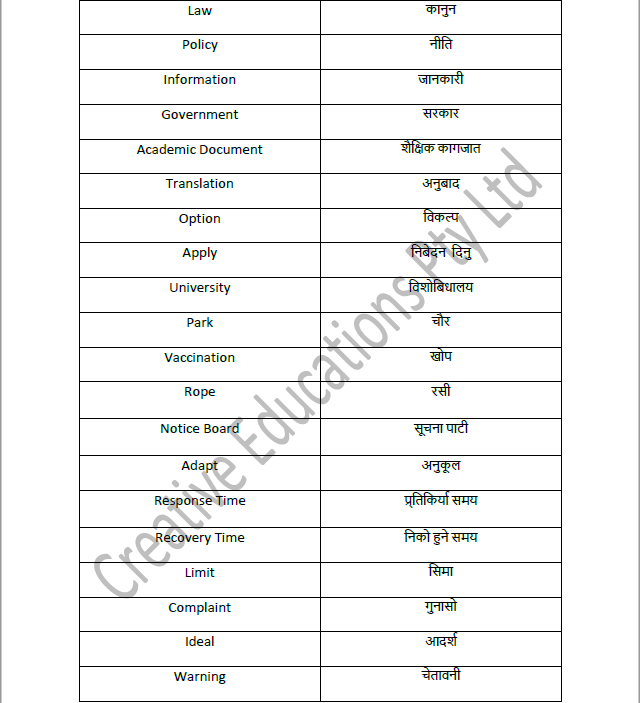
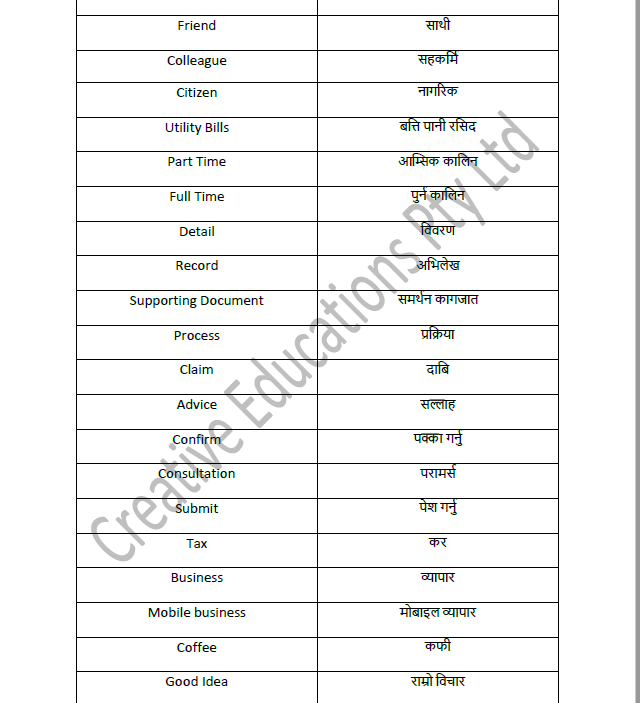
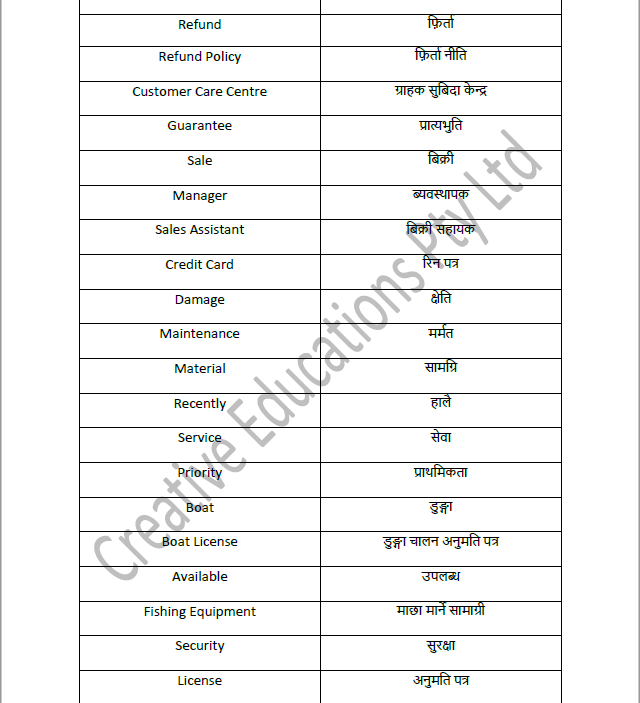
Nepali NAATI Vocabulary

Vocabulary. That’s where we all have a problem when it comes to passing the NAATI exam.

So, to help you practice here’s a list of words related to the topics in a recent Nepali NAATI exam.

These are just a few of the hundreds of Nepali NAATI vocabulary we have for you. Join us today and get closer to 5 points for your PR.

nepali naati vocabulary

To book your next free trial class, you can contact us on 0422 279 722 or send us an email at info@creativeeducations.com.au

Categories
PTE Tips

Ultimate Template for PTE Re-Tell Lecture

Today, we will talk about the ultimate template to get a good score in PTE Re-Tell Lecture.

But before that, the first step is to understand how the PTE Re-Tell Lecture section is scored.

In this section, PTE tests your oral fluency, pronunciation and content delivery. Let’s take a brief look at each…

Oral Fluency

As you are delivering your content, PTE looks for the rhythm, phrasing and the stress you put on into each word and sentence. To get a good score in oral fluency, you must speak at a natural pace without hesitation or long pauses. You can read our blog to improve your oral fluency score.

Pronunciation

To determine if your pronunciation is good or not, PTE looks for the stress you put on words and vowels. We have covered this topic in detail in our blog about improving your pronunciation.

And finally…

Content

As you are speaking, PTE analyses your speech and determines whether what you are saying is relevant to the topic provided or not.

To get a good score here, you must summarize the key points and try to include key figures like dates, or numbers.           

With that out of the way… it’s time to dive into tips to get a good score in PTE Re-Tell Lecture. So let’s begin…

Preparation Time before you Retell a Lecture

Remember, you will have 3 seconds before the recording begins to play automatically.

That’s why… you should use that time to quickly look at the picture and determine what the lecture is going to be about. After that, you’ll hear a lecture of up to 90 seconds.

When that is done, you will have only 10 seconds to prepare.

Here… the key is to make sure that you use the first 3 seconds and the entire time the speaker is talking.

You do that by taking notes of important details like dates, numbers, names, events… anything that’s relevant to the photo you see and the topic of the lecture.

Take loads of notes. Use short-hand if possible.

The Template

To use this template, get your notes ready. You took your notes right? Good. Let’s move on…

Here’s a sample template for you to use… on your next PTE exam.

The speaker was talking about… (the topic).

He/she added… (point 1)

He/she discussed… (point 2)

He/she also said that… (point 3)

In addition, he/she mentioned… (point 4)

And he/she suggested that… (point 5)

That’s it. Getting a good score in PTE Re-Tell Lecture is that easy… all you need to do is follow this template… you can adjust it to your liking.

NOTE: But make sure that you don’t repeat the same sentence structure over and over again. The key is to ensure you have different sentences and are covering all the key points from the lecture. Also, it’s important that you speak without stopping. If you make a mistake, then, just move on to another sentence. Don’t trackback and try to fix it. That will only make your mistake worse.

With that template in mind, you should be able to get a good score in this section.

And… here are a few bonus tips that will get you extra prepared for your PTE exam.

Keep an Eye on the Timer

Remember, you have only 40 seconds to give a complete answer. So, plan your answer accordingly. In most cases, 40 seconds will be about 12-15 sentences.

It really depends on the pace of your speech and the length of your sentences. What you can do is, you can record yourself regularly and get a feel for how many sentences 40 seconds is for you.

Use the picture to your advantage

The picture is almost always relevant to the talk. So use that to your advantage. If you feel like you’re running out of things to say… just mention a couple of things you see on the picture.

It helps to keep a note of what the speaker said about the picture.

Secret of a good score

Content + Oral Fluency + Pronunciation = Good Score

Make sure that you are speaking at a natural pace, in a natural tone. Don’t try to fake an accent. It is NO time to show-off. Just do your best to get the message around clearly and concisely.

Your notes should be short

Don’t waste your time writing full sentences. Make sure that your notes are short and understandable.

For example:

16M acres-land instead of “16 million acres of land

20 Jul 1969- moon land instead of “On 20 July 1969, humans landed on the moon

Pop 50k tigers 1967 instead of “population of tigers was 50,000 in 1967

That’s all you need to get a good score in PTE Re-Tell Lecture. But make sure you practice.

Because nothing beats practice. If you need guidance to help you get the score you want, you can contact us.

And you can read our other blogs. You can start with PTE Test Format to know what to expect in a PTE Test.

Categories
PTE Tips

PTE Describe Image- 1 Technique and 3 Tips to Mastery

Okay… after repeat sentence, the next question type you will encounter in your PTE Speaking exam is Describe the Image.

In this task, you will have 25 seconds to look at the image and you should talk about the image for 30-40 seconds.

This is a difficult task if you don’t prepare for it well. Let’s move on to tips on how to get a good score in PTE Describe Image.

But before we dive into general tips, let’s do an example, to help you get an idea of what to expect and what to say in your exam with 1 simple technique.

pte describe image graph

The given bar graph shows the child mortality rate in different regions in 2015. From the graph, we can see that Africa has the highest child mortality rate at just over 8 percent while Europe has the lowest mortality rate at 0.58 percent. Overall, the average child mortality rate in the world is 4.5 percent. In conclusion, the graph shows the average child mortality rate in the year 2015 in various regions of the world.

Now, let’s breakdown the sample answer.

Introduction

We start our speech by introducing the key idea presented in the image.

Body

In the body of the sentence, we highlight/contrast/compare (depending on the graph or chart given) and discuss the points that stand out the most.

In our case, we compared between the highest and the lowest range. And then used the information in the chart to give more detail (average child mortality rate) about the image.

Conclusion

And finally, we concluded by re-emphasizing the topic of the image.

That’s the only technique you will need to get a good score in this question type.

Introductionmention the contents of the image

Bodydescribe the key trends and ideas in the image

Conclusionrestate or summarize the contents of the image.

Now, let’s dive deeper into some tips to improve your score:

Talk about the key ideas from the image

Just like in the example above, use the 25 seconds you have to get a sense of what the key ideas and the most striking details of the image are. You can use the erasable board to take notes of the key ideas. Refer to them when you are talking to make sure that you’re covering the most important details in the image.

Try not to pause between sentences

Since this question type tests your oral fluency and pronunciation, try to speak at a natural pace without pausing. Using filler words like, “ummm….” is a big NO-NO. Avoid them at all costs.

The best way to improve yourself is to practice every day.

Describe the key trends in the image

Every image will have some trends that you can talk about. Let’s take a look at another example to illustrate this point.

pte describe image chart

                Sample Answer:

The given chart shows us Index of Human Development from 1870 to 2015. According to the chart, Australia has the highest Index of Human Development while Nigeria has the lowest. From the chart, I can see that there is a continuous upward trend in Index of Human Development in different parts of the world like China, Nigeria, Australia, United States. In conclusion, this chart shows that the Index of Human Development is rising steadily from 1870 to 2015.

Here, we followed a similar pattern to the bar graph. Comparisons and discussion of key ideas. And in this case, we also discussed the key trend—the continuous rise in the chart.

Final Thoughts

When it comes to describing an image in PTE, the key is to keep practicing and speaking naturally. PTE tests your ability to analyze key relationships, ideas, and trends in the data. To get the best score in this section, you must discuss and logically connect key ideas in the image.

If you want our guidance to help you get a good score in PTE, contact us to book your place.

Categories
PTE Tips

PTE Listening

This is the last section in your PTE test. And it lasts between 45-57 minutes. Now, between the Reading and Listening section, you can take an optional 10-minute break.

Remember, if you don’t take a break, those 10 minutes will NOT be added to your time for Listening section. So, we recommend, you take your break to freshen yourself up.

Ready!! Let’s breakdown the individual question types in Listening Section.

Summarize Spoken Text

You will hear a 60-90 second clip and after that is done, you must write its summary in 50-70 words. This way, the test will assess your listening and writing skills.

To get a good score in this question type, take notes using the erasable board and include key points from the clip.

Oh! And you’ll have 10 minutes to finish your summary. So, use that time to ensure that your spelling, grammar, and vocabulary are correct and that your content summarises the spoken text in 50-70 words.

Next up…

Multiple Choice, Multiple Answer

You’ll hear a 40-90 second clip and you’ll need to answer a multiple-choice question which has more than one correct answers.

You’ll have 7 seconds before the audio begins to prepare to take notes and you can only listen to the it once. After you listen to the audio, select the best answers that appropriately match the meaning and summarize a part of the spoken text. Don’t go for sentences with words that match what you heard. Focus on the meaning/message of the clip.

After that comes…

Fill in the Blanks

Here, you’ll hear a 30-60 second audio clip and you’ll have a paragraph with multiple blank spaces in them.

Use the 7 seconds you have before the audio begins to skim the paragraph and get a sense of what to expect. If you can type fast then type as you hear the audio, because the audio will repeat whatever is written on the paragraph.

If you think you can write faster than you can type, use the board to write the missing words and fill them after you hear the full audio.

When you’re done, press Next to get to…

Highlight Correct Summary

In this question, you’ll hear a 30-90 second audio. And you’ll see multiple possible answers that summarise what you heard.

Make sure that you focus only on listening to the audio. Don’t get distracted by the options you see. Focus only on the audio and take notes of what you hear. And after that, read your notes and select the option that is closest to what your note says.

And then comes…

Multiple Choice, Single Answer

You’ll hear a 30-60 second audio clip and in this type, there is only one correct response.

So, before the audio begins, quickly read the question and possible answers. This way you’ll have a good idea of what you may hear in the audio. Then after the audio begins, focus on main idea you expect to hear based on the question you saw.

For example, you may be listening for the speaker’s opinion, or supporting information or the speaker’s purpose. Listen for the answer to the question you see.

After that, you’ll…

Select Missing Word

This time the prompt will vary between 20-70 seconds.

Here, the last word or group of words in the audio will be replaced by a beep. So, focus intently on the audio and try to guess what the next word or words would be if you were speaking and then, select the most appropriate answer from the options given.

After you’re done here, you’ll need to…

Highlight Incorrect Words

Here you’ll hear an audio of 15-50 seconds and see a transcript of the audio.

The problem is, some words will be incorrect. So, while listening and reading, you must highlight the words that don’t match what the speaker says in the audio. To make it easy for you, follow the text with the cursor and highlight the wrong word as soon as you spot it.

And the final question type is…

Write from Dictation

Here the audio length is 3-5 seconds.

With that said, make sure that you either get your note board ready or you type fast. Because, after you hear the 3-5 second audio, you must type in all the words that you hear. Okay… not all, but ideally all the words that you can. Type in whatever you remember or whatever you could take note of. If you’re confused, make your best guess depending on the sentence you heard.

So, that’s it… we are done with our PTE Listening test.

Next, you may want to dive deeper into how to practice for each question type. For that, you can go to our How to Get a High Score in PTE post and choose the section that you want to practice.

Good Luck!!

Categories
PTE Tips

PTE Reading

The next section after the Speaking and Writing section is the PTE Reading section. This section takes about 32-40 minutes depending on the pace at which you solve the questions and the number of questions.

There are 5 question types in this section. We will take a brief look at each here.

Reading and Writing Fill in the Blanks

This type assesses your reading and writing skill with a prompt of up to 300 words.

In this section, you will see a passage with some missing words shown as a blank box. Upon clicking the box, you will see a list of words. And from the list, you must select the most appropriate word that fits the context of the passage.

Multiple Choice, Multiple Answer

In this type, your reading skill is assessed and you will see another prompt of up to 300 words.

In this section, you will need to read a passage and then select all the answers that are correct and relevant to the passage you read. In this question type, you will receive negative marks for incorrect answers. Thus, you must be confident with the answer you choose.

Re-order Paragraphs

You will see a prompt of up to 150 words that will assess your reading skills.

In this section, you will see a list of sentences in jumbled order. Your task is to re-assemble them in the correct order so that the sequence of sentences make sense.

A simple way to solve this is to identify the main idea of each sentence by looking for key words. Then, you can use the key words to re-order the sentences in a logical order.

Fill in the Blanks

In this section, you will see a prompt of up to 80 words.

To assess your reading skill, you will see a passage with some words missing. You will also see a list of words in a blue box at the bottom. To get maximum score here, you must drag and drop the list of words and complete the sentence.

Multiple Choice, Single Answer

In this section, you will read another prompt of up to 300 words.

Just like in the other multiple choice type, you will read a passage. This time, there will be ONLY ONE correct choice. In this section, there will be NO negative marking, so you should respond to all the questions.

So, this was a brief overview of each question type you will see in your PTE Reading section. We will dive deeper into each section in the coming weeks.

Categories
PTE Tips

PTE Writing and Speaking

Today, we will get familiar with PTE Speaking and Writing section. This section takes between 75-90 minutes depending on the number of questions you get and the speed at which you solve the questions. There are 8 different question types in this section including the Personal Introduction which is not scored.

So, let’s begin.

PTE Speaking

Personal Introduction

You’ll have 25 seconds to read the prompt and 30 seconds to speak about yourself.

Read Aloud

This type tests your reading and speaking skills.

You’ll see a prompt of up to 60 words. For this you will have 30-40 seconds to prepare and the response time depends on length of the prompt. You’ll receive a maximum of 3 points for content, 5 for oral fluency and 5 for pronunciation.

Repeat Sentence

                This tests your listening and speaking skills.

You’ll hear a 3-9 second recording and you must recite what you heard, word for word in the same order. In this type also, you will receive 3 for content, 5 each for oral fluency and pronunciation.

Describe Image

  This tests your speaking skills.

You’ll see an image and you’ll have 25 seconds to prepare your response. You can use the erasable board to take notes. You must answer within 40 seconds and you will receive a maximum of 5 points each for content, oral fluency and pronunciation.

Re-tell Lecture

This tests your listening and speaking skills.

You’ll hear an audio of up to 90 seconds and will see an image related to the topic. Be ready with your erasable board to take notes because the audio will play straight away. After the audio finishes playing, you will have 10 seconds to prepare your response.

And in 40 seconds you must cover the key points discussed in the lecture. For this type also, you will receive 5 points for content, oral fluency and pronunciation.

Answer Short Question

This tests your listening skills.

You’ll hear a 3-9 second audio where you will be asked a question and you must answer with a single word or a few words in 10 seconds. You will receive 1 point for each correct word.

PTE Writing

Summarise Written Text

This tests your reading and writing skills.

In this question type, you need to read a text of up to 300 words. In 10 minutes, you must write a 1 sentence response of no more than 75 words. To get the maximum marks possible, your sentence must include main points of the given text. You will receive 2 marks each for content, grammar, vocabulary and 1 for formal requirements, like the tone and quality of your response.

Written Essay

This tests your writing skill.

Here, you will be given a topic to write about and you’ll have 20 minutes to write a 200-300-word argumentative essay on the topic.

In the 20 minutes, you must plan, write and proofread the essay. Thus, time management is important. You will receive a maximum of 3 points for content, 2 each for the formal requirements, development, structure, coherence, grammar, linguistic range, vocabulary and if there are no spelling errors in your answer, you will receive another 2 points.

That’s it for an introduction to PTE Speaking and Writing question types.

Next, you can get read our guide on How to Get a High Score in PTE. And you can read these to improve your PTE Oral Fluency and Pronunciation.