Categories
Uncategorized

How to Book a NAATI Test

Let’s take a brief overview of how to book a NAATI test.

First, we’ll go to the NAATI homepage.

Then, if you don’t have an account, you will need to register for one.

After, you are done registering, you will receive an email with a temporary password.

Use your email and the password you received to login to NAATI page. You will be prompted to change your password.

After you are done changing your password, you will be directed to the main page where you can book your test.

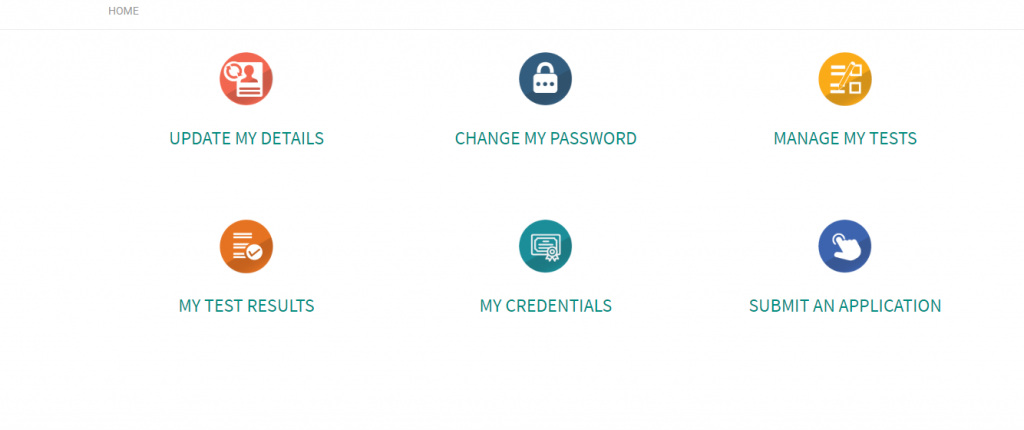
NAATI test booking page

To book your test, click on the Submit an Application page. And there, you can click on the Credentialed Community Language(CCL) Testing button to start booking your page.

Here, you will be asked to enter your personal details.

After entering details, you can select the option “To obtain Credentialed Community Language Points.

Credentialed Community Language (CCL) Points

After that, select your language and your test date.

And then, you will have to upload your Australian Passport Size photo.

Once you are done, you will receive an email confirming your test.

We have made a video to help you with the process.

If you want help with the booking or if you are in a hurry, contact us and we will help you book a test.

Categories
CCL Latest News

Why Online Practice Platform for NAATI?

With NAATI conducting its exams online, using our online practice platform to practice NAATI dialogues will help you get ready for the exam and it will help you become familiar with the way NAATI conducts its online exams. So, when you are in the exam, you will know what to expect and you will get a better score.

Now, that’s one benefit. But there’s more…

Online practice is easy, convenient and you are in control… you can practice when you want and where you want. There won’t be any schedules to keep up to and there won’t be any traveling to do. All you need is your laptop, an internet connection and motivation to study for your exam.

You choose your own time to practice and you can do it from the convenience of your own home. Now that’s something I would never say no to. When something comes up that needs your attention, you can pause your practice session and resume right where you left, whenever you want to.

The only issue will be to keep yourself motivated and disciplined enough to not get distracted. Now, we have something to help you focus.

Pomodoro Technique.

What’s that?

A time-keeping technique to help you focus on your task.

What you need to do is, set a timer for the duration of your practice; let’s say 1 hour. Then, you keep all the distractions away for that 1 hour and focus on your practice material. After the 1 hour is over, you reward yourself for keeping to the commitment by taking a 15-minute break. And then, you start the process again for as many times as you want to.

This will do two things for you. You will get to practice for your NAATI exam at home, and you will increase your self-discipline. Now, that’s what I call, “Hitting two birds with one stone.”

What to Expect in the Practice Platform?

In addition to over 1400 Nepali words for your self-practice, you will see a number of dialogues just like the ones in the actual NAATI exam. After selecting a dialogue to practice, you wait for the speaker to finish and the bell to chime before starting to answer. The next segment will automatically begin once your answer is recorded.

And you can also take a mock exam to get yourself ready for the real test because the mock exam simulates a real exam. And if you want personalised feedback from our trainers, you can set up Zoom meetings or Skype calls to discuss your weaknesses and areas of improvement. All of that from the convenience of your home. You won’t need to step out of your room.

If you haven’t registered for the online practice platform, don’t delay. Take control of your schedule, take control of your time and your NAATI score. Whenever you feel ready, choose a course and follow the instructions on our “How to Get Started” page to get familiar with the practice platform. Take full advantage of our online practice platform and practice at home at your own time.

Categories
PTE Tips

6 Ways to Improve PTE Repeat Sentence Score

In PTE Repeat Sentence, you have to listen to a recording of a sentence and repeat it within 15 seconds. The recording will be various of lengths from 3 seconds to 9 seconds and they will test your listening and speaking abilities.

On the surface repeat sentence. After all, all you need to do is repeat what you hear… anyone can do it, right? Wrong. People usually underestimate this section because it sounds so easy. But, we don’t want you to make the same mistake.

This section is testing your pronunciation, fluency and content delivery and your score will depend on the quality of your response. Therefore, it is absolutely important to make sure that you are speaking in a natural way, without omitting or replacing any words.

We recommend reading our posts on improving pronunciation and improving fluency, so that you will be better prepared and can get a high score in PTE.

So, let’s dive into 6 ways you can improve your score in PTE Repeat Sentence section.

Close your eyes.

We mean it. Close your eyes, and listen only to the audio. This way you will have a better chance of remembering what the speaker is saying. And that’s one of the most important ways to get a good score in this section. So, we recommend you start playing some brain games to improve your focus and memory.

Chunk the text you hear

You can divide the text into chunks so that you can recall phrases instead of single words while speaking. The key here is to listen for common phrases like: on Monday, on the way, getting better, enjoy your day.

This way, you can predict what comes next and hence, you can focus on what’s being said rather than focus on memorising individual words.

Listen to and Repeat What Native Speakers Say

To improve your ability to predict common phrases, you can listen to native speakers on YouTube, or podcasts or even watch movies. This will get you familiar with the common phrases used in English.

You can turn the subtitles on or get a transcript, then try to repeat what the speaker says in exactly the same way. Doing that will help you speak in a more native way; improving your score.

Use shorthand

If you can write fast, this will be the route you want to go. While we don’t recommend writing whole words, you can write down words in their short form to significantly shorten them. There are no hard and fast rules to shortening words. Actually, we encourage you to use whatever technique you are familiar with.

Speak naturally

Just like in other speaking questions, the pace of your speech, the pronunciation and the intonation matters in how you are scored in this section also. So, it is important to speak naturally, with a clear pronunciation and in a fluent manner.

Practice with other people

There is no other way better than practice. So, keep speaking in English in your daily interactions. You will build your speech muscles, improve your pronunciation, improve your fluency and ultimately improve you PTE score. Speaking naturally is so important that it can help you get a high score in PTE.

That’s all. Keep practicing and communicate in English every day to help you become a better speaker. Next, you can read our post on understanding PTE Test format to get better acquainted with the test. Or you can read our post on improving your Read Aloud score.

And if you need guidance from our trainers and get a high score in PTE, then contact us.

Categories
PTE Tips

5 Tips to Improve PTE Read Aloud Score

Last week, we started the series by taking a look at PTE Test Format. This week, we will focus on PTE Read Aloud Section.

This section tests your ability to get the message and the meaning across to others when you are speaking aloud. To get a good score in this section, you will need to focus on pronunciation and oral fluency.

We’ll begin by looking at how this section is scored. That way, we’ll be able to prepare for it more strategically. So, let’s breakdown how this question type is scored and then we’ll dive into practical tips into improving your score in this section.

How PTE Read Aloud Section Is Scored

Content Delivery

You have to read all the words in the text. Any words that are omitted or added will affect your score negatively. The key here is to make sure that you get the message across clearly. Speaking just the way you do every day is the key to mastering content delivery.

Oral Fluency

It is a measure of smoothness in your speech. If the rhythm, phrasing and stress of your speech are natural with proper intonations and inflections then, you will get a high score in oral fluency. Make sure that you are not hesitating or repeating or taking a long pause in your speech. Because if you pause for more than 3 seconds, the recording will automatically stop.

Pronunciation

This tests your ability to speak words like a native speaker. If the vowels, consonants, stress in words and phrases in your speech are native-like then you will get a high score in pronunciation. It is important to speak in such a way that a native English speaker understands what you are saying.

Okay… with the scoring metric out of the way, let’s focus on improving your ability to read aloud confidently, clearly and accurately.

 Practical Tips to Get a Good Score in Read Aloud Section

Use the 40 seconds

Before you start, you will have 40 seconds to read and prepare for the text you will see on the screen. Use this time by reading out the entire text in your mind and if there are any complex words in the text, read those words multiple times before the timer ends.

Speak Every Word the Way It Is

Don’t add or remove any word and speak the word just the way it is written in the text. If the word is “don’t” then, say “don’t”, not “do not”. If the word is “can’t” then, say “can’t”, not “cannot”. If the word is “controller” then say “controller”, not “controllers”. If the word is “book” then say “book”, not “books”. If the word is “11th” then say “eleventh”, not “eleven”. Every word must be spoken the way it is written.

Speak Naturally

Speak in a natural way. Not like a robot. When we speak, we usually start and end our speech by changing our intonation. When we start, we use rising intonation and when we end, we use falling intonation. And make appropriate pauses where necessary. For a comma, do a brief pause and if there is a full stop do a slightly longer pause. The pauses and changes in intonations make the way you speak sound natural and the computer looks for these in your speech.

Look for the Keywords

Certain words in the sentence will have a greater weight than others. These words usually determine the context and message of the text. Thus, you should increase your voice slightly when you are speaking those words to denote their importance in the sentence. If you can, stress the word’s syllables in proper inflections and you will sound like a native speaker.

Practice

Practice is the key element to improving your speaking, and that includes reading aloud. Get a book or look at any news and then read them aloud. Doing this makes your muscle memory better and when you are ready for the big day… you will have had enough practice to speak confidently, clearly and accurately.

Next, you can read more on how to get a high score in PTE.

If you want expert guidance, then contact us and we will help you get the score you want in PTE.

Categories
CCL Latest News

Changes to NAATI CCL Test (2020)

We have good news for all the students who have their NAATI tests on or before 30th June 2020.

Because of the current COVID-19 (Coronavirus) crisis, NAATI has partnered with Microsoft Teams to help you complete your NAATI CCL test online.

For full details, see the NAATI announcement on how to access the test.

In short, if you have a test confirmed until 30th June, NAATI will send you an email confirming your test date and time.

On the day of your test, you will receive an invitation on Microsoft Teams from a NAATI staff member with a link to your online test. So make sure you have Microsoft Teams installed on your computer/laptop or tablet/smartphone.

At this time of crisis, use the free time you have to prepare for your NAATI exam and get 5 points closer to your Australian PR.

If you need help from experienced trainers, we provide fully online classes for your convenience. That means you can prepare for your NAATI with us on our online session with our experts and be more prepared than ever for your upcoming test.

For more details, call us at +61 422 279 722 or contact us via. the form

Categories
PTE Tips

Let’s understand the PTE Test Format

Here’s the thing, giving the PTE exam without knowing the test format is a recipe for disaster. Without knowing how the test is conducted, there is no way you will be fully prepared for it.

You can practice the individual sections all you want, but if you don’t know the test format, you won’t know what to expect and the test will be full of surprises for you.

So today, let’s take a look at the PTE test format in brief so that you will know how to prepare for the test get a high score.

PTE tests are 3 hours long and there are 3 main parts in the test.

  1. Speaking and Writing
  2. Listening
  3. Reading

Just so you know, there is an optional 10-minute break between the Reading and the Listening parts of your test. But if you choose to not take it, those 10 minutes will not be added to your remaining time.

In the test, you will be exposed to multiple accents and deal with multiple choice questions, interpreting graphs and charts, writing essays. Also, your pronunciation, fluency, vocabulary and grammar will be tested extensively.

So, let’s take a look at the test format, question types, and time allocated for each section.

PTE Test Format

PTE Test Format

So, that’s it!! That’s your PTE test in a nutshell.

If you know the type of questions that come in the exam and if you understand how long you have for each section and you are ready to take the next step in your preparation for the PTE test.

Go out there! Knowing the test format goes a long way in building your confidence up for the exam.

And if you want to be so confident that when you go into the exam hall, you will feel like you are giving another mock test, then join our classes today. We will conduct multiple mock tests for you, help you practice all the test materials and get you ready for the 20 points towards your Australian Permanent Residency.

Call us at: +61 422 279 722

Visit us at: Suite 104/Level 1, 83 York Street, Town Hall, Sydney

Next, read our blog post on how to get a high score in PTE to get ready to score 79+ in your PTE exam.

Categories
Latest News PTE Tips

5 Ways to Improve Your Pronunciation

Let’s be honest. There is no easy way to master pronunciation in a day or a week. But if you apply these powerful tips you can definitely improve your pronunciation within a month or two.

Here’s How to Improve Your Pronunciation

Analyse Yourself

The first thing you want to do is become aware that your pronunciation is not as good as it could be. Once you become aware of this fact… improving your pronunciation suddenly becomes easy.

To become aware, I want you to record yourself when you are reading a book or speaking in front of a mirror. When you do that, you will have a reference point at which to look at.

After you record yourself speaking, listen to it… and you will immediately know where your pronunciation went wrong.

The next step is to look-up for the pronunciation of your word online and get a feel of how the word is pronounced.

Then, all you need to do is record yourself speaking again and try a next time.

Do this consistently and you will see a drastic improvement in your pronunciation.

Break Word Into Syllables

After you are done recording… you will notice that you have omitted certain sounds from words. What you need to do next is, you need to break those words down into syllables. Use the website “How Many Syllables”  to find out how many syllables a word has. The website will also help you listen to and see how a word is pronounced and which words to put the stress on.

Let us take the word “syllable” as an example.

syllable –  syl/la/ble

That’s 3 syllables.

Let’s take another example-

Pronunciation— pro/nun/ci/a/tion

That’s 5 syllables.

Now, when you do that you instantly see how the word is formed and which part of the word to pronounce and with practice, you will learn to pronounce each syllable properly, improving your pronunciation.

Practice Tongue Twisters

Okay, this one is tricky. Literally.

What you need to do is, practice reading out the tongue twisters.

Try these two tongue-twisters right now.

“How much wood would a woodchuck chuck, if the woodchuck could chuck wood?

He would chuck, he would, as much as he could,

And chuck as much wood as a woodchuck would,

If a woodchuck could chuck wood.”

AND

“If one doctor doctors another doctor,

Then which doctor is doctoring the doctored doctor?

Does the doctor who doctors the doctor, doctor the doctor the way the doctor he is doctoring doctors?

Or does he doctor the doctor the way the doctor who doctors doctors?”

Feels impossible?

Yeah… for me too… when I first tried it.

But keep trying… because tongue-twisters are a great way to work your speech muscles and that will improve your pronunciation.

Keep practicing your tongue twisters at least once every day and you’ll see the difference it makes in your pronunciation score in PTE.

Watch a lot of movies

Seriously!! Watch a lot of English movies or listen to English programs or songs.

When you watch an English movie, or listen to an English program, or English songs… what is happening is… subconsciously, your brain is picking up the “subtleties” in the English language. And the more your watch and listen and speak… the better your pronunciation get.

And when you consistently practice what you hear with your friends and co-workers… you are bound to improve your pronunciation and your score in PTE.

So… go out there… treat yourself with a good English movie and improve your pronunciation.

Speed of Your Speech Matters

Just like in oral fluency, the speed of your speech matters. Faster doesn’t mean better when it comes to oral fluency and pronunciation.

Rather what you need to do to improve your PTE score is speak in a natural speed. Don’t try to rush your speech… otherwise the computer will detect it as mispronunciation and you will score lower.

I don’t want you to do that… so… keep speaking like you would to your friend. And if your friend says you speak too fast… slow down!!

That’s all!! Follow the tips and practice every day… and you will definitely improve your pronunciation in coming months.

Categories
Latest News PTE Tips

How to Get a High Score in PTE

Getting a high score of more than 79 in PTE is not only your pathway to gaining 20 points for your PR in Australia, but another way to study in most English speaking countries.

So, let’s begin by understanding what it is, why it is important and then… we’ll dive into 6 tips to get a high score in PTE. 

What is PTE?

Pearson Test of English(PTE) is a computer-based test of English considered the “fastest and the most accurate” language test accepted academic institutions and governments around the world, including Australia.

Why is it important?

Unlike IELTS, PTE is entirely computer-based. And because of that, many see it as a game of beating the computer. But, we disagree. PTE is much more complex than that.

PTE tests your reading, listening, writing, speaking, comprehension, fluency and even your pronunciation. So, don’t fall into the trap of assuming that PTE exams are easy.

However, with the right strategy and the right knowledge, YOU WILL SCORE 79 or higher in PTE.

How to get a high score(79+) in PTE?

As promised, here are 6 ways to improve you score in PTE.

Know the Test Format

You must know how the test is conducted. In short, there are three sections:

  1. Speaking and Writing—75 to 90 minutes
  2. Reading—32 to 41 minutes
  3. Listening—45-57 minutes

One key thing to remember is that if you finish one section with 10 minutes to spare, that remaining time WILL NOT carry over to the next section.

This means you must manage your time to be able to finish the test within the allotted period.

Know the question types for each section.

Familiarize yourself with the type of questions for each section. 

In short, there are 21 different question types in the PTE exam.

Out of the 21, there are 8 question types in the Speaking and Writing section (including your Personal Introduction). The reading section has 5 different question types and the listening section has 8 question types.

For Speaking & Writing section, you have the following question types:

  • Personal Introduction
  • Read Aloud
  • Repeat Sentence
  • Describe Image
  • Re-tell Lecture
  • Answer Short Question
  • Summarize Written Text
  • Essay Writing

Then, on Reading section, you will have:

  • Fill in the Blanks (covers Reading and Writing sections)
  • Multiple choice, choose multiple answers
  • Re-order paragraphs
  • Fill in the blanks
  • Multiple choice, choose single answer

And finally, in the Listening section, you will have:

  • Summarize Spoken Text
  • Fill in the blanks
  • Highlight correct summary
  • Select missing word
  • Highlight Incorrect words
  • Write from Dictation
  • Multiple choice, choose multiple answers
  • Multiple choice, choose single answers

Understand how the test is marked

You must understand that each question type has a different weight when it comes to marking. Some questions are scored based on their correctness only… while others are scored based on their correctness and the quality of response.

But, how can a computer mark your test like a human examiner?

Well… to answer that question, we researched deep into the Pearson PTE website. What we found was that leading expert-designed and marked the test. The computer used marking pattern from the experts to train itself to mark the tests. Only after it successfully scores the test just like a human examiner, the computer is allowed to mark tests from real candidates.

Using a computer to mark the test ensures that you will be marked withouth any bias or laspe in concentration.

Speak Fluently 

To get a high score in fluency and pronunciation, it is important to speak without stopping and without hesitation. If you feel like you have missed a word, don’t correct yourself. Just keep speaking. Speak the way you speak normally. Don’t rush your speech.

Most students are afraid that they need to speak fast otherwise they will go over the time limit. This is just a myth… because from what our students have experienced, we know that you will have enough time even if you speak in their normal speed.

However, you must avoid unnatural, long pauses. This is where the computer deducts the most points which will stop you from getting a high score in PTE.

And make sure that you are speaking like a human… with varying intonations and rhythm. What you need to do is speak as you would speak with another person—by expressing emotions. 

Choose a small test center

This one is often overlooked. Choose a small test center because they have fewer test-taker. 

But why?

Because… imagine this… you chose a very popular test center. And that’s what everyone does. When you reach your test center, you see that the whole place is crowded with other test takers and the moment you enter the test room, you see yourself surrounded by other test-takers.

What happens next??

All the test takers around you will speak in a loud voice to make sure they are heard… and this means you will be disturbed. This means you won’t be able to concentrate on your own test. And you will not receive the score you want.

This is why it is necessary to choose a small test center. Other test takers won’t disturb you in a small test center, and you can get a high score in PTE.

PRACTICE! Lots of PRACTICE!!

Practicing online is a good way to improve yourself. But… do you know what’s even better?? Practicing real exam questions with other people. If you are looking for an institute to help you practice your skills… contact us we run PTE classes 7 days a week.

Feel free to check out our PTE courses to help you get a high score in PTE.

Categories
Latest News PTE Tips

4 Ways to Improve PTE Oral Fluency

As a non-native English speaker, mastering oral fluency is difficult. But it can be done once you know how PTE oral fluency is marked. Before I get to the scoring criteria of oral fluency, let’s begin by understanding the 5 levels of oral fluency to improve your score in PTE.

Pro Tip: In your PTE exam, oral fluency applies to Read Aloud, Repeat Sentence, Describe Image and Re-tell Lecture question types.

5 Levels of Oral Fluency in PTE

Native-Like

5 marks.

Speech has no pauses between words. You speak fluently with a smooth rhythm, pausing at the appropriate places and with appropriate inflections and tone in your voice, just like a native speaker.

Advanced

4 marks.

Speech has acceptable rhythm with minimal inappropriate pauses. And there is only one hesitation, repetition or false-start in your speech.

Good

3 marks.

Speech is at an acceptable speed but has uneven rhythm. There could be more than one hesitation but majority of your words are continuous without pauses.

Intermediate

2 marks.

Speech may have a long pause or may be uneven and it has two or three hesitations, repetitions or false starts.

Limited

1 mark.

The rhythm or phrasing in your speech is irregular. Speech is categorised as Limited if it sounds discontinuous and uneven. Poor phrasing, long pauses, multiple hesitations, repetitions and/or false starts are evident in your speech.

Disfluent

0 marks.

Speech has multiple hesitations, pauses, false starts and is slow. Most words are isolated and more than one long pause could be present.

Remember These to Master Oral Fluency

Speed of your speech

It is the main aspect of oral fluency. You have to be able to speak without pausing to think, and it has to flow naturally.

We don’t mean to say that you need to keep speaking like a robot without a pause. What we mean is, you need to pause when necessary like when you see a comma or a full stop. You can either pause or you can change the tone of your voice in these places, depending on the circumstance. 

And when we say speak without pausing to think, we don’t mean that you need to speak fast. You must not speak so fast that it impacts your pronunciation.

Instead, you need to focus on speaking at a natural pace, just like when you are talking to your friend.

Rhythm

Rhythm is difficult to explain. Because it comes to us so naturally that we don’t even think about it. It is important in your oral fluency because it helps you express your emotions. When we speak with our friends, we speak with various intonations and we express our emotions in our speech. And that’s how we need to speak to improve oral fluency in the PTE exam.

Don’t speak like you are a monk chanting a mantra and don’t read like you are reading off the script. What you need to do is, talk like you would normally talk to your friend.

Staccato (A long pause)

Staccato occurs when each word you are speaking comes without a flow and each word sounds disjointed. The moment you take a long pause to think about the next word, you will be losing 2 marks.

Hesitation, Repetition and False Start

The PTE computer algorithm categorizes pauses in terms of hesitation, repetition and false start. And based on the number of “pauses”, the computer deducts your marks by 1 to 3 points, reducing your oral fluency.

When you hesitate in the middle of your speech, when you repeat the same segment or when you start from the middle because you began speaking too early or too late… the computer starts deducting your marks.

So, make sure that you speak at a natural speed, with proper rhythm, minimal pauses, hesitation, repetition and false starts to keep your oral fluency high and your PTE score higher.

What Next?

So far, we have covered how the computer marks our oral fluency in PTE. Now, just imagine this… you want to score 79 or higher… you choose an online platform and begin practicing online. But you have no way of knowing whether your oral fluency is good enough or not. What do you do? You’ll ask your friend… but does your friend know how the computer scores oral fluency?

If yes, then, that’s great news!! 

If no, then… we’ve got you covered…

You can call us on 0422-279-722 or visit us at our office (Level 1/83 York St, Sydney NSW 2000) to improve your oral fluency and get a high score in PTE with help of our expert trainers.